Showing posts with label Society. Show all posts

Wednesday, 16 April 2014

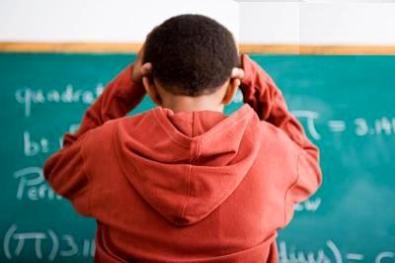
How to be an ideal student?

Be the first to comment!


  1. Become an Ideal Child
    ·        Be Yourself: Be you and be natural-Well, if you don't know the real you, just act naturally, the self you are most laid back and comfortable in.
    ·         Do as you would like to be done to you. Listen to people and make everyone feel good.
    ·         Stay calm! If you yell a lot and are argumentative, people won't want to be around you.
    ·         Don't use bad language. Most people don't think bad language is cool. They think it makes you look stupid.
    ·         Honor your parents. Don't lie to them, and don't do any sneaky stuff, because they know what you're doing anyway, there's no way around it. Help them to build a wall of trust for you, but when you get it, don't let it fall down again!
    ·         Do well in school. Listen to everything your teacher says, take notes, and even make little practice tests for you to practice your skills.
    ·         Get along with your friends and family, especially with your brothers and sisters. That part can be hard.
    Become an Ideal Student
    ·         In order to be a good student, one of the key areas you'll have to work on is being organized. Without organization, you'll have trouble finding your school supplies and notes!
    ·         Buy a binder to store your notes, homework, and tests/quizzes in it. To distinguish the difference between each class, purchase tabs or make some of your own. Another option is to purchase folders to either replace the binder or assist it.
    ·         Buy a pencil case and put all your writing utensils in there. Be sure you always have an extra pencil in there in case something happens to the pencil you're using. If you prefer mechanical pencils, make sure you have extra lead in the pencil case as well.
    ·         In case you have no access to a pencil sharpener in the classroom, bring your own small one. The kind that catches the shavings is recommended, and make sure it doesn't make too much noise!
    ·         To be prepared for math, it is recommended you slip a small calculator in the pencil case as well. If your pencil case is big enough, put a ruler in as well.
    ·         Buy a planner or an agenda to make note of the due dates of assignments, tests, and big projects. That way, when you arrive at home in the evening, you will be able to organize your homework schedule and figure out which assignment is due first, and when you should work on it. Good prioritizing is necessary in this area.
    ·         Make sure your locker is clean and organized. Keep it free of random papers - keep all papers in your binder or folder(s) - and do not clutter it with unnecessary decorations, as they are pointless and you'll have to take them down at the end of the year.
    ·         It is recommended you stack your books in your locker in the order of your classes. That way, you can easily grab your book from the top stack, and later slip it underneath the pile for tomorrow!

read more...

Friday, 4 April 2014

Mom, How beautiful are you?

Be the first to comment!

This is one of the Facebook post but you wouldn't have read that because its too long...boring and tatty but the biggest fact is that it one one of the post on fb-wall of punks too - it is not that having this makes your dude respect degraded but a higher order person.

From changing the diapers to singing lullabies; patiently understanding the temperaments and beholding all emotions in one go -- all this seems to be very easy, but when comes to practical, its more difficult than any other activity. All this is done by a mother. When somebody asks peculiar features of a mother, the best answer is "mother is itself a peculiar creations".

The best could be explained by the people who lose their mothers when they needs the most; what actually a 'mother' matters in children's life. A other is the custodian of whole family and a nurturer of her children. We belittle the pride of women when we say her 'star'
her brightness can make a star relive
when lost, love cannot be retrieved
love is her passion, nurturing the job
makes the child learn to hop
context below may make you go to deep thinking
If it weren't for your mom, you wouldn't be breathing right now. If nothing else, you should thank her for that. Mothers are the emotional backbones of the family. They provide the holding place for everyone’s feelings  and do their best to keep us from being hurt.
Who would kiss your boo-boos to make it all better if she weren't around? Mothers have the magic touch (and kiss) to help us heal our wounds, physical and emotional. Truly, our mothers worked hard and made sacrifices, so our lives would be better. There are not a lot of people willing to do that, so let her know you appreciate it.

Mothers are forgiving—so forgive her in return. Perhaps nothing will be as valuable a gift to both of you as forgiveness. Open your heart and drop your resentments. Now that’s love.
When you want to climb the tallest mountain, your mother will make your lunchfor you. She is the one who will support your dreams when no one else will. She will also remind you to wear clean underwear. Her boundaries made you a better person. You may not have liked some of her decisions, especially when you wanted to party with your friends, but she did keep you out of trouble. Look at some of your friends without a mom who has cared that much. A mother’s ears and eyes hear and see everything. They also have a computer-like memory for all the good (and some of the bad) that came your way. It’s nice to have someone with whom you can reminisce about your whole life. Mom taught you to be a functioning adult. That was her job, and without that, making it through the modern world would be very hard. Your mom may have forced you to do your homework, but now you see how important it was.

At last, A mother’s smile, when it is directed toward you, makes your day a whole lot better. All she needs is to know that she has helped you to be and feel your best. Say thank you.
read more...

Sunday, 30 March 2014

Toon to Teen

Be the first to comment!
When we change the mindset of thinking of cartoons, giggles and bubble baths to adventure, reunions and congress; we call ourselves transposing from 'toons' to 'teens'. We spend time with Friends rather parents, bunk classes, celebrate and socialize with peers. Garbaging the comic scripts and bringing novels of fiction, thriller and romance; recruit wood characters and whores in place of parodies and lampoons. Often scholarly people call us adolescents. But all these is just the glitter of it, coming in this category brings a wholesome of problems with it. 

Blowing over the chilled highs and lows of aspects like emotions, physical scenario and social temperaments, a teen faces multifold challenges. One minute, we might feel downcast and so another second, great. with this fluctuating mental situation, we come to physical portion. We develop biologically to a reproductive age till the 3rd toon stage (13) and hence get carried by venereal activities. They usually care for there physical allurement and captivation. This sense of enticing lead them to miscreation and raise questions in their mind - Am I too skinny, Am I too fat.


Students bind themselves in relationships with the opposite sex due to sexual lust and that's often, but the problem arises in the latter part i.e. when the student tend to have unprotected venereal activities without the consent of their elderly people and at an inappropriate way and age.


Now comes when the biggest attraction becomes the biggest problem - peer pressure. Peers - the solemn mates. When we excel, its the characteristic nature that other won't like irrespective of his relation with us. This causes trolls in and out of class and hence led to social depression and trauma. To deal with the peer pressure, face them till an extend when its not fatal for you. Don't make them take U turn, you, yourself turn aback from the situation without thinking that your ego will be belittled. Do not involve third parties in it either for support or resistance.


We can back-hold from all these situations with the given steps:
Ø Prepare yourself for the scenarios that would be coming in the different maturity levels.
Ø Control the hormonal secretion with subsidiary alliances of the organs.
Ø Socialize to an extent that doesn't violates the norms and hereditary casting.
Ø Perform venereal activities at appropriate age and with protected instruments.
Ø Do not think that your elderly people are nincompoops and stay in touch with them.
Ø Become dependent and don't involve parents in everything.

BY PARTH RAGHAV
BIBLIOGRAPHY AND ACKNOWLEDGEMENTS:
en.wikipedia.org
www.pamf.org
www.google.com


read more...

Sunday, 23 March 2014

Poverty - A Global Challenge

Be the first to comment!
Please Interpret the following images/cutouts before reading the article:


We often categorize people on their financial stipulation. How is this process of categorizing done, and to what measure, a person is considered to be poor or rich. There rolls in the concept of Poverty. Poverty literally means a state of 'helplessness'; now you would be wondering what kind of helplessness is being talked about, given are the following few examples:
  • a poor peasant cannot afford shelter and clothes for him and his family.
  • a women cannot feed his child due to lack of food.
  • a passionate budding scientist cannot afford to learn in school
By the terminology, Poverty means scarcity or dearth, or lacking of certain material possessions encompassing money (currency), food, shelter, attire, miscellaneous requirements. 

According to the National Power Index {it combines the products of the weighted factors of GDP, defense spending, population and technology, expressed as relative share of the global power}, Poverty is decided at global level.

Following characteristics determine the slope of poverty functions:

  • Gross Domestic Product (market value of officially recognized commodities)
  • Defense expenditure 
  • Annual Population Growth
  • Technological developments
Following is the ranking of countries according to NPI:

Rank201020202030204020502060
1 United States United States United States China China India
2 China China China United States India China
3 India India India India United States United States
4 Japan Japan Japan Japan Brazil Brazil
5 Germany Germany Brazil Brazil Japan Japan
6 Russia Russia Russia Russia Germany Germany
7 United Kingdom Brazil Germany Germany United Kingdom Pakistan
8 France United Kingdom United Kingdom United Kingdom Pakistan United Kingdom
9 Brazil France France France France France
10 Italy Indonesia Indonesia Pakistan Russia Nigeria
Rank201020202030204020502060
11 Indonesia Italy Pakistan Indonesia Indonesia Indonesia
12 South Korea South Korea Mexico Mexico Nigeria Mexico
13 Canada Mexico Italy Saudi Arabia Mexico Russia
14 Mexico Pakistan Saudi Arabia Nigeria Saudi Arabia Egypt
15 Saudi Arabia Canada South Korea Iran Egypt Saudi Arabia
16 Spain Saudi Arabia Iran Egypt Iran Ethiopia
17 Pakistan Spain Canada Canada Canada Bangladesh
18 Iran Iran Nigeria Italy Turkey Canada
19 Australia Turkey South Korea Bangladesh Iraq
20 Turkey Egypt Spain Turkey Iraq Turkey
To understand the concept of poverty, we need to understand its dimensions:
Ø Income Poverty: Dependence on cash for purchases of essential goods and services
Ø Educational and Health Poverty: Lack of adequate educational and health provisons at appropriate time.
Ø Tenure Poverty: Land and housing in authorized areas are not affordable, therefore the poor occupy land illegally and construct their houses without construction and occupancy permits
Ø Personal Insecurity: Drug/alcohol abuse and domestic violence; family breakdown and reduced support for children; social diversity and visible income inequality in cities, which increases tensions and can provide a temptation for crime
Ø Financial Insecurity: Dependence on cash income and lack of access to credits and safety netsØ  Social and Political exclusion/disempowerment: Illegitimacy of residence and work. Isolation of communities that are disconnected from jobs and services.

The section provides an introduction to the concept and measurement of poverty defined as not having enough today in some dimension of well-being.
To compute a poverty measure, three ingredients are needed:
  1. One has to define the relevant welfare measure. 
  2. One has to select a poverty line – that is a threshold below which a given household or individual will be classified as poor. 
  3. One has to select a poverty indicator– which is used for reporting for the population as a whole or for a population sub-group only.
Estimation Of POVERTY

How can we estimate poverty?

There are various ways of estimating poverty: 
monetary poverty is expressed in (absolute or relative) economic terms; human poverty relies on social indicators; social exclusion broadly implies marginalization (involving political considerations). 
STATISTICS:
Theoretical Statistics:
There are six billion people in the world
2.9 billion of them live on less that two dollars a day and 1.2 billion live on less than one dollar a day. 
In Egypt, 3.1 percent of the population survive on less than a dollar a day, and 52.7 percent live on less than two dollars 

Absolute monetary poverty indicators: 

  1. Estimating poverty in terms of purchasing power is one of the most common measures of poverty. Thresholds, called poverty lines, are built on the pricing of a basket of goods that would satisfy a person’s basic nutrition needs (1). 
  2. These are converted into purchasing power parity units* to secure international comparability. A headcount poverty index can then be calculated, showing the percentage of poor people in the total population. 
  3. The muchpublicized headcount poverty index is then highly dependent on the level of the poverty line (the higher the poverty line, the larger the number of the poor).

                      
monetary poverty indicators: 

  1. Absolute poverty measurements give no indication as to the relative position of the poor. Not only are the poor of the poorest countries generally poorer than those living in richer countries, but their position in society also depends on income distribution inequalities. Relative poverty indicators allow for interesting international comparisons. 
  2. For example, the average income in the richest 20 countries is 37 times higher than that of the poorest 20; in Brazil, the income of the poorest ten percent of the population is only 0.9 percent of the total national income, while the richest ten percent get 47.6 percent. 
  3. Relative monetary poverty indicators may help us understand the subjective dimension of poverty: it may be less tolerable to be poor when there is plenty of wealth on display at the top levels of society than when there are no visible opportunities of upward mobility.


Social indicators and human poverty: 

  1. Monetary poverty indicators, represented by income or consumption, do not express the true dimensions of destitution. For example, less than one percent of children do not reach their fifth birthday in rich countries, but in poorer countries the number reaches 20 percent. The UNDP developed a multidimensional poverty indicator, the Human development Index, to account for social factors such as health, nutrition, life expectancy, access to water, school attendance and literacy. 
  2. Social indicators may be used as complementary data to monetary poverty estimates, or they can form an approach in their own right.


Poverty as a denial of human rights: 

  1. Human poverty means that people cannot lead a secure existence, make use of opportunities, have choices, freedom, dignity and self-respect, or have access to resources needed for a decent standard of living. 
  2. In western industrialised countries social exclusion, the cumulative dynamics (end result) of marginalization, means denial of human rights (citizenship rights). 
  3. The human poverty approach, seldom used in the developing world, allows for a better analysis of the political dimension of poverty, conspicuously absent in oversimplified monetary measurements.

ALITER

Choosing and Estimating a Poverty Line


Once an aggregate income, consumption or non-monetary measure is defined at the household or individual level, the next step is to define one or more poverty lines. Poverty lines are cut-off points separating the poor from the non-poor. They can be monetary (e.g. a certain level of consumption) or non-monetary (e.g. a certain level of literacy). The use of multiple lines can help in distinguishing different levels of poverty. There are two main ways of setting poverty lines—in a relative or absolute way:
  • Relative poverty lines: These are defined in relation to the overall distribution of income or consumption in a country; for example, the poverty line could be set at 50 percent of the country’s mean income or consumption.
  • Absolute poverty lines: These are anchored in some absolute standard of what households should be able to count on in order to meet their basic needs. For monetary measures, these absolute poverty lines are often based on estimates of the cost of basic food needs (i.e., the cost a nutritional basket considered minimal for the healthy survival of a typical family), to which a provision is added for non-food needs. For developing countries, considering the fact that large shares of the population survive with the bare minimum or less, it is often more relevant to rely on an absolute rather than a relative poverty line. Different methods have been used in the literature to define absolute poverty lines 
    • The food-energy intake method defines the poverty line by finding the consumption expenditures or income level at which a person’s typical food energy intake is just sufficient to meet a predetermined food energy requirement. If applied to different regions within the same country, the underlying food consumption pattern of the population group just consuming the necessary nutrient amounts will vary. This method can thus yield differentials in poverty lines in excess of the cost-of-living differential facing the poor.
    • The Cost of Basic Needs method values an explicit bundle of foods typically consumed by the poor at local prices first. To this, a specific allowance for nonfood goods, consistent with spending by the poor, is added. However defined, poverty lines will always have a high arbitrary element; for example, the calorie threshold underlying both methods might be assumed to vary with age.

  1. Alternative poverty lines are also sometimes used. They can be set on the basis of subjective or self reported measures of poverty. Alternatively, one can combine absolute and relative poverty lines. This technique allows to take inequality and the relative position of households into account while recognizing the importance of an absolute minimum below which livelihood is not possible.
  2. Ultimately, the choice of a poverty line is arbitrary. In order to ensure wide understanding and wide acceptance of a poverty line, it is therefore important to ensure that the poverty line chosen does resonate with social norms (with the common understanding of what represents a minimum). 
  3. For example, in some countries, it might make sense to use the minimum wage or the value of some existing benefit which is widely known and recognized as representing a minimum. 
  4. Using qualitative data could also be useful to decide what goods would go in the basket of basic needs (when constructing an absolute poverty line). For comparisons over time, the stability and consistency of the poverty line need to be ensured.

Reasons for Poverty
  1. History. 
  2. War & political instability.
  3. National Dept
  4. Discrimination and social inequality. 
  5. Vulnerability to natural disasters.
  6. Colonial Rule
  7. Regional Activities and Rituals
  8. Indebtedness
  9. Agricultural Dependency
  10. Miscellaneous Factors
Please contact through E-Mail for expansion of the text 

BY PARTH RAGHAV
ACKNOWLEDGEMENTS:
Blandine Destremau
http://web.worldbank.org/
wikipedia.org
Parth Raghav
NCERT Economics
google.com

read more...
 
Copyright © 2014 OmniProdigy • All Rights Reserved.
Distributed By Free Blogger Templates | Template Design by BTDesigner • Powered by Blogger
back to top